

If there’s one thing I like about Japanese action games, it’s when a developer takes a familiar genre formula and throws just enough weirdness into it to make the whole thing feel fresh again. That’s exactly where GOBBLE comes in. Nippon Ichi Software has announced this hand-painted 2D action platformer for a Western release in 2027, and after seeing what the team is doing with its combat and resource systems, I’m already keeping this one on my radar.
The Western wait is going to be a long one, though. GOBBLE is scheduled to arrive in localized Asian markets on September 24, 2026, with Japanese, Korean, and Traditional Chinese interfaces, while the Western version is planned for Nintendo Switch, Nintendo Switch 2, PlayStation 5, and PC via Steam in 2027. That gives players plenty of time to pick apart the mechanics, watch imported gameplay, and figure out whether GOBBLE is actually the sleeper hit it currently looks like—or just another stylish indie that peaks in the announcement trailer.
Rute Has a Problem, and His Weapon Is a Hungry Monster
GOBBLE follows Rute, a young protagonist searching for his missing family after monsters suddenly return to a world that believed those creatures had been wiped out for good.
Things get ugly fast. Rute finds himself surrounded by hostile creatures with seemingly nowhere to run, until an extremely strange ally appears: a highly intelligent, ravenous bird-like demon named Scythariel.
Its pitch to Rute is about as subtle as you’d expect from this game:
“Take me as thy weapon.”
Scythariel isn’t some adorable mascot that sits on Rute’s shoulder and throws out occasional buffs. This thing is effectively the centerpiece of the entire combat system. It can transform from a bird-like monster into a gigantic scythe capable of devouring defeated enemies.
And there’s a hilarious twist to their relationship. Scythariel can speak human language, but it doesn’t exactly treat Rute like the chosen hero of an epic fantasy. Rute is closer to a personal servant whose primary job is helping Scythariel secure its next meal.
That bizarre dynamic fits the game’s tone perfectly.
The story itself uses fast-moving cutscenes designed around a comic-book presentation rather than dumping walls of static dialogue boxes on the player. It’s a smart choice for a game this visually loud, because the presentation can keep moving at the same speed as the action.

The Health Bar Is Also Your Ammo
This is easily the mechanic I’m most interested in.
GOBBLE turns health into a resource, which immediately changes how you approach combat. When Rute defeats an enemy with Scythariel, the monster can consume the corpse. That restores Rute’s health—but that recovered health isn’t simply there to keep you alive.
You can spend it to activate powerful abilities.
That creates a nasty little risk-reward loop. You might be sitting on a healthy chunk of HP and decide to burn some of it on an advanced movement skill to clear a huge gap, reach a hidden platform, or access an area that would otherwise be completely out of reach.
Suddenly, taking damage isn’t the only thing you need to worry about. Spending your health can be just as important as preserving it.
The obvious min-maxing question becomes: How much HP can I afford to burn right now?
That should make aggressive play extremely important. Instead of playing a platformer like a coward—dodging every enemy and desperately protecting your health bar—you’re encouraged to hunt monsters down and convert their bodies into the resources you need.
That’s a much more interesting combat economy.
Enemy Types Actually Matter
This is where GOBBLE’s exploration system starts getting interesting.
Different enemies don’t simply exist to fill the screen with things to slash. According to the game’s early information, consuming different monsters can provide different bonuses and traversal abilities.
So if you’re trying to reach a secret section, the question isn’t necessarily “Can I make this jump?” It could be “Which monster do I need to eat first?”
That’s a much more engaging approach to level design.
It also means players who want to 100% every stage will need to pay attention to enemy placement. You can’t blindly smash through everything and expect to stumble into every collectible. You’ll need to understand which enemy powers are available, where they’re located, and how they interact with the environment.
For completionists, that could become the real meat of the game.
The Art Direction Is Doing a Lot of Heavy Lifting
GOBBLE doesn’t look like another pixel-art platformer, and that’s probably its biggest advantage at first glance.
Nippon Ichi Software is using a hand-painted SD pop-art aesthetic, combining illustrated backgrounds with smooth character animation and exaggerated comic-book effects. The entire game feels closer to an animated graphic novel than a conventional 2D platformer.
Then there are the visual sound effects.
When Rute dashes, attacks, or interacts with the environment, words such as “DASH!”, “HOP!”, “JAB!” and “WHIZ!” appear directly on the screen.
Normally, that kind of gimmick could become obnoxious pretty quickly. Here, though, it seems to fit the visual language of the game. The sound design isn’t treated as something that exists separately from the visuals—the game literally puts the impact of those sounds into the world.
It’s a bold choice, but honestly, I’d rather see a developer commit this hard to a distinct visual identity than release another technically polished platformer that looks interchangeable with fifty others.
Exploration Could Be the Real Endgame
The combat is flashy, but GOBBLE isn’t positioning itself as a pure action game.
Stages contain hidden collectibles, secret areas, alternate routes, and environmental puzzles that rely on specific monster abilities. That gives the platforming side of the game considerably more weight.
This is also where the health-as-resource mechanic could become much more interesting than it initially sounds.
Imagine finding a suspicious gap in a stage and realizing that you’ve got the exact monster ability needed to reach the other side—but activating it costs a chunk of your health. Now you’re making a decision instead of simply pressing the correct button.
Do you spend the resource and risk entering the next combat encounter weakened?
Or do you backtrack, find another enemy to consume, and return with a full meter?
That kind of decision-making is exactly what can turn a straightforward action platformer into something worth replaying.
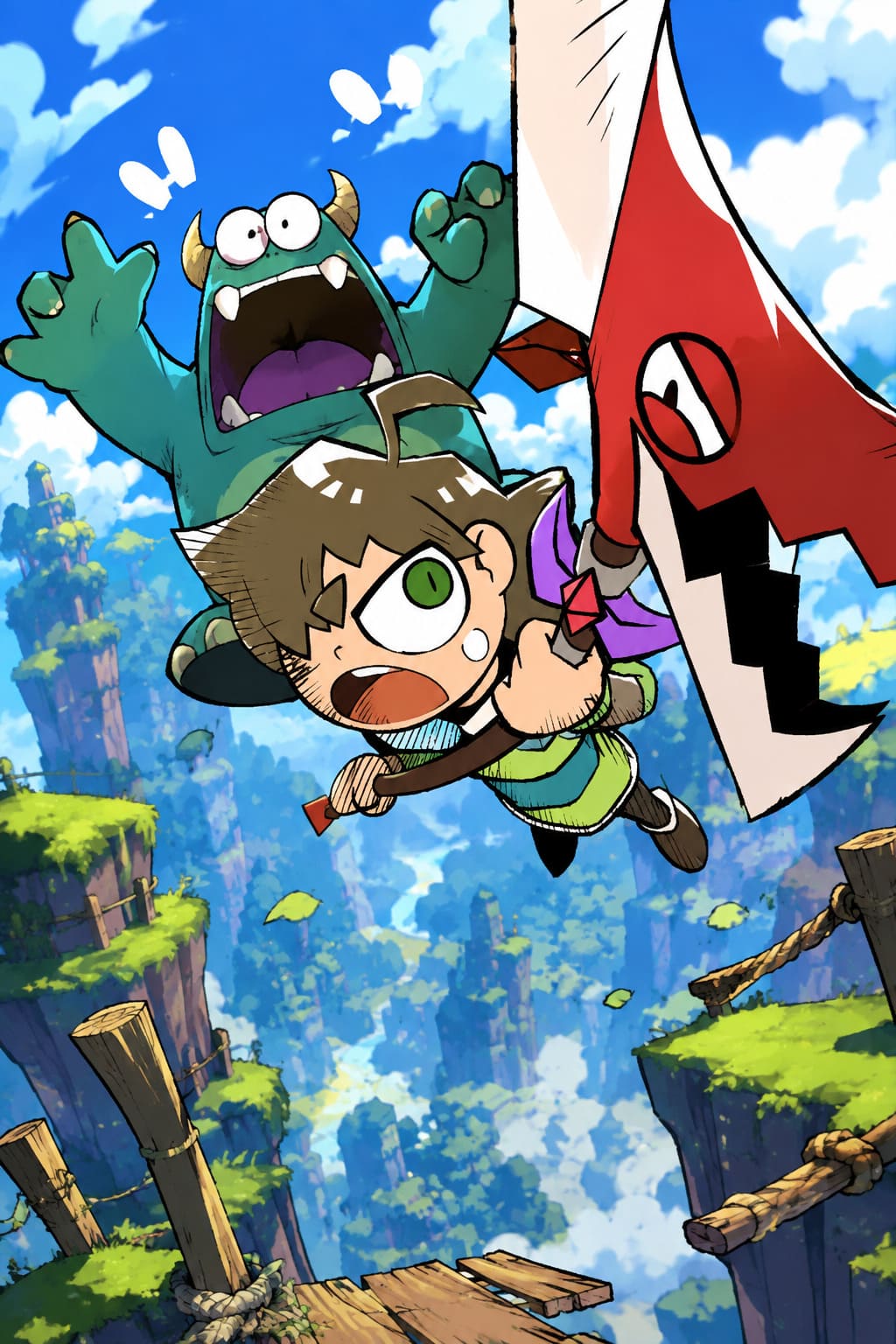
GOBBLE Is Coming to Switch 2, but the Original Switch Still Matters
The platform lineup has already sparked plenty of discussion, especially around Nintendo Switch and Nintendo Switch 2.
Releasing on both generations makes obvious business sense. The original Switch has an enormous install base, while Switch 2 gives Nippon Ichi more headroom for higher-quality assets, faster loading, smoother effects, and denser on-screen action.
The big question is performance.
Players are already wondering whether the hand-painted visuals and particle-heavy effects will hit 60 FPS on the original Switch, or whether the Switch 2 version will be the real showcase build.
I wouldn’t be surprised if the two versions end up feeling noticeably different. GOBBLE’s art direction may look deceptively simple, but layered animation, visual effects, dynamic comic-book elements, and large numbers of enemies can put serious pressure on older hardware.
For a platformer built around fast movement and precise combat, frame rate isn’t just cosmetic. If the game has an insane skill ceiling, stable performance becomes part of the gameplay.
Why GOBBLE Is Worth Watching Before 2027
There’s still a lot we don’t know about GOBBLE, and that’s important. We haven’t seen enough of the full progression system, endgame structure, difficulty curve, or how deep the monster abilities actually go.
But the core idea is already strong.
You have a protagonist searching for his family, a demonic bird that turns into a gigantic scythe, enemies that can literally become resources, health that doubles as ability fuel, and levels designed around experimenting with monster powers. Wrap all of that in a hand-painted comic-book presentation and you get something that has a personality of its own.
That matters.
The action-platformer space is crowded, and looking good in a trailer isn’t enough anymore. GOBBLE needs tight controls, smart level design, meaningful enemy variety, and a progression system that doesn’t fall apart after the first few hours.
If Nippon Ichi Software gets those fundamentals right, this could be one of those weird Japanese releases that quietly becomes a cult favorite.
For now, GOBBLE is scheduled for Western release in 2027 on Nintendo Switch, Nintendo Switch 2, PlayStation 5, and PC via Steam, with the localized Asian release arriving much earlier on September 24, 2026.
And personally, I’m far more interested in seeing how that bizarre consume-and-empower loop works in a real stage than I am in another ten-minute trailer full of flashy attacks. That’s the mechanic that could make GOBBLE genuinely special.


